Common Myths About Plastic Mattress Covers
If you mention plastic mattress covers to most people, you’ll usually get a quick reaction — and it’s rarely positive. Words like “noisy,” “uncomfortable,” or “old-fashioned” tend to come up fast. Most of that comes from memories of products people used years ago, not from how plastic mattress covers are actually used today as a mattress protector.
The reality is a bit more practical, and a lot less dramatic.
Myth 1: Plastic Mattress Covers Are a Thing of the Past
This idea shows up everywhere. People assume that once fabric mattress protectors became popular, plastic mattress covers simply disappeared.
They didn’t.
They just stopped being marketed for everyday luxury bedrooms. Instead, they found a very clear role as a function-first mattress protector. In places where waterproof mattress protection matters more than softness, plastic mattress covers are still the default choice.
You’ll see them in hospitals, care homes, dorm rooms, rentals, and even guest rooms that don’t get daily use. In those situations, nobody is looking for a plush feel — they want to protect the mattress and move on.
Myth 2: Plastic Mattress Covers Are Always Uncomfortable
This one is partly true, but only if you skip an important detail.
A plastic mattress cover isn’t designed to replace your sheets. It’s designed to sit under them. When people complain about discomfort, it’s usually because they slept directly on the plastic mattress protector without any layer on top.
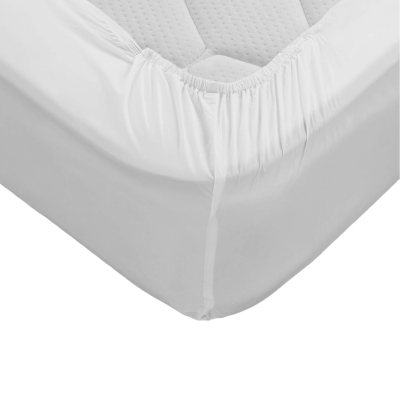
Once you add a fitted sheet — or even a thin mattress pad — most of that “plastic feeling” disappears. At that point, the mattress protector is doing its job quietly in the background.
For short-term use, guest stays, or practical setups, comfort usually stops being the main issue people worry about.
Myth 3: Plastic Mattress Covers Are Only for Accidents
Yes, plastic mattress covers are excellent at handling spills and accidents. That’s obvious. But that’s not the only reason people choose them as a mattress protector.
Moisture doesn’t always come from accidents. Sweat, humidity, and body oils slowly soak into a mattress over time. Once that happens, cleaning becomes nearly impossible.
A plastic mattress protector blocks all of that. It also helps limit exposure to dust mites and can slow down bed bug problems by keeping the mattress sealed and easier to inspect.
So in many cases, plastic mattress covers are more about prevention than emergencies.
Myth 4: They’re Loud and Crinkly
This myth comes straight from older materials.
Early plastic mattress covers were thick, stiff, and loud. Every movement made noise, and people never forgot that experience. Modern plastic mattress covers are thinner and more flexible, especially vinyl-based options.
Are they completely silent? No. But once a fitted sheet is on top, most of the noise people expect simply isn’t there. For the average sleeper, it’s rarely noticeable after the first night.
Myth 5: Plastic Mattress Covers Make You Overheat
This concern is fair, but it depends on where and how the mattress protector is used.
Plastic mattress covers don’t breathe. That’s true. But heat buildup is influenced by room temperature, bedding layers, and mattress type. In air-conditioned rooms or cooler climates, overheating is usually not a problem.
That’s one reason plastic mattress protectors work well in hotels, hospitals, and rentals — climate control is already part of the environment.
Myth 6: Fabric Mattress Protectors Are Always Better
Fabric mattress protectors are often more comfortable, but “better” really depends on what you expect from a mattress protector.
Fabric options focus on breathability and softness. Plastic mattress covers focus on complete waterproof mattress protection. Fabric protectors often resist moisture; plastic blocks it entirely.
For homes with kids, pets, or frequent guests, that difference matters more than people realize.
Myth 7: Plastic Mattress Covers Don’t Last
Another assumption is that plastic mattress covers tear easily and need constant replacement.
Low-quality covers do fail faster — just like low-quality fabric protectors. But well-made plastic mattress protectors hold up surprisingly well when they’re not overstretched or exposed to high heat.
For bulk use, rentals, or commercial settings, they’re often one of the most cost-effective mattress protection options available.
When Plastic Mattress Covers Actually Make Sense
Plastic mattress covers aren’t trying to replace every mattress protector on the market. They’re meant for situations where protection matters more than luxury.
They work best when:
Waterproof protection is non-negotiable
Mattresses are used by multiple people
Cleaning needs to be quick and simple
Budget matters for larger quantities
In those cases, plastic mattress covers do exactly what they’re supposed to do.
Final Thoughts
Most of the negativity around plastic mattress covers comes from outdated experiences. When used correctly, they’re a straightforward, reliable mattress protector that still solves problems modern options sometimes don’t.
They’re not for everyone. But they’re also not the relic people assume they are. Once you stop expecting them to feel like fabric and start judging them on protection, plastic mattress covers make a lot more sense.